November 10 , 2026, Hong Kong

The Ress family continues to shape one of Germany’s most respected estates, championing organic viticulture and aligning itself with a modern, mindful drinking culture
As global wine drinkers increasingly lean toward fresher, lower-alcohol white wines that pair easily with food, Riesling has found renewed relevance. Its bright acidity, moderate alcohol, and expressive character align perfectly with the modern palate and the growing moderation movement. Few estates embody this balance and craftsmanship as gracefully as Balthasar Ress. Founded in 1870 in the heart of Germany’s Rheingau region, the winery has remained family-run for five generations, guided today by Christian Ress, great-great-grandson of founder Balthasar Ress. Boasting their elegant Rieslings and Pinot Noirs from organically farmed vineyards that stretch across some of Rheingau’s most prized sites, from Assmannshausen to Hattenheim, we spoke with Marc Pohl, Export Manager, who joined the estate earlier this year after two decades in the wine trade. This conversation offered a window into how a deeply traditional German winery continues to evolve, balancing classic craftsmanship with progressive sustainability, and exploring new opportunities in the international market.
A Family Estate Rooted in Rheingau Tradition
Located in the village of Hattenheim, the Balthasar Ress estate is one of Rheingau's most respected producers. Its vineyards stretch from Hattenheim to Assmannshausen, capturing the region’s diverse terroirs, from riverbank sites with deep, fertile soils to the steep, slate-covered slopes of Rüdesheim, and the cooler, quartzite-rich hills of Hallgarten at nearly 300 metres above sea level.
This geographical diversity finds clear expression in the wines. As Marc explains, “Our Rieslings reflect their origin: elegant, fruit-driven, with balanced acidity and moderate alcohol. They’re unmistakably Rheingau, yet distinctly Balthasar Ress.”
Sustainability as a Philosophy
In 2019, Balthasar Ress became Hessen’s largest certified organic winery, but for Christian Ress this wasn’t a marketing move. It was about identity and responsibility.
“For Christian, sustainability isn’t about sales; it’s about ensuring the estate thrives for generations to come,” says Marc. “It’s about the land, the people, and the long-term health of our environment and business.”
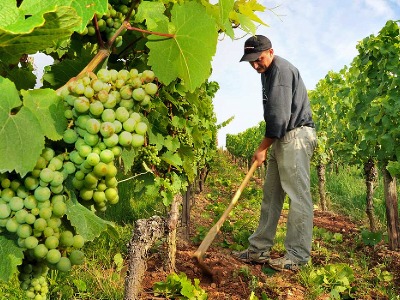
However, this journey began as early as 2010, when Christian made the decisive move to eliminate chemical herbicides like glyphosate and replace them with mechanical weed control, a radical step for an estate of its size. Over the following years, he reshaped his viticulture team, bringing in experts in organic farming and guiding the conversion vineyard by vineyard, evaluating the costs, yields, and quality implications along the way.
Organic viticulture here is more than compliance; it is a philosophy expressed in every detail, from compost management and flowering greening to careful canopy work that maintains vine balance and reduces disease pressure naturally. Photovoltaic panels now power the winery, while lightweight bottles, some as low as 360 grams, help cut transport emissions. In the vineyards, innovation continues with the planting of fungus-resistant grape varieties like Souvignier Gris, first bottled in 2024, reducing the need for chemical treatments. The result is a self-regulating ecosystem, where vines develop stronger root systems, thicker leaves, and grapes with more concentrated aromas. A tangible expression of the estate’s belief that fine wine should be born from a living, resilient environment.
Classic Grapes And Contemporary Balance
Balthasar Ress is known for its mastery of two grapes: Riesling and Pinot Noir. While Riesling is the estate’s hallmark, representing the majority of its production, Pinot Noir has also found a refined expression in the steep, red slate vineyards of Assmannshausen and Rüdesheim. For Marc, Balthasar Ress wines embody “three forms of classicism”: “Classic grape variety, classic Rheingau, and classic Balthasar Ress.”
The winemaking philosophy prioritizes clarity, precision, and elegance over power. Alcohol levels rarely exceed 13%, aligning perfectly with the global moderation trend. “We’re not looking for broad or heavy wines,” Marc notes. “We aim for finesse, balance, and the kind of freshness that makes our wines a joy to pair and pour. Moreover dry Rieslings are gaining ground, even in markets like China. Our dry styles, particularly our Premier Cru and Grand Cru-level wines, are now recognised globally as world-class.” With alcohol levels between 10.5% and 12.5%, these wines meet a growing consumer preference for lower-alcohol, food-friendly wines, a trend especially strong in Asia’s premium dining scene.
Opportunities in Asia’s Growing Wine Landscape
Already present in 50 markets worldwide, including Japan, Korea, and Australia, Balthasar Ress now looks to strengthen its presence in emerging Asian markets such as China, Vietnam, and India. Marc sees these regions as ripe for authentic, terroir-driven wines with heritage appeal. “For Asian buyers, Balthasar Ress represents a family-owned estate with a long history, producing classic German Rieslings with organic certification and consistent quality. We have the scale and range to meet diverse market needs while staying true to our identity.”
As the wine industry continues to face headwinds globally, yet for Balthasar Ress the focus remains steady: continuing the work started over 150 years ago. Evolving without losing sight of its roots. As Marc concludes, “We aim to make this estate future-proof—to continue improving every day, to refine our wines, and to serve our customers with the same integrity that has guided Balthasar Ress since 1870.”
The 2025 China Competitions results are now live. View 2025 winners.
Key Dates
Super Early Bird Deadline: May 20, 2026
Early Bird Deadline: July 31, 2026
Regular Deadline: October 14, 2026
Warehouse Deadline: October 22, 2026
Judging Date: November 10, 2026
Winners Announcement: November 24, 2026